The Thermal Start: Preheat your oven to 400°F (200°C). Line a large baking sheet with parchment paper. High heat is vital here to create a “quick-set” exterior while keeping the inside moist.
Dry Integration: In a large bowl, whisk together the flour, sugar, baking powder, salt, and spices. This ensures the leavening is evenly distributed, preventing “lopsided” fritters.
The Apple Fold: Toss the finely diced apples into the dry mixture. This coats the fruit in flour, which prevents them from sinking or clumping together in the batter.
Wet Marriage: In a small bowl, whisk the eggs and milk together. Pour this into the dry ingredients and stir with a wooden spoon just until a thick, lumpy dough forms. Do not overmix, or the fritters will become tough rather than tender.
The Drop: Using a large spoon or an ice cream scoop, drop mounds of dough onto the prepared baking sheet. Gently flatten them slightly with the back of the spoon to ensure even baking.
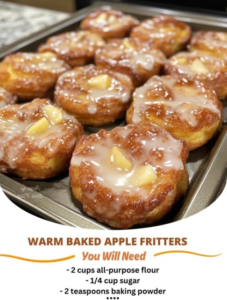
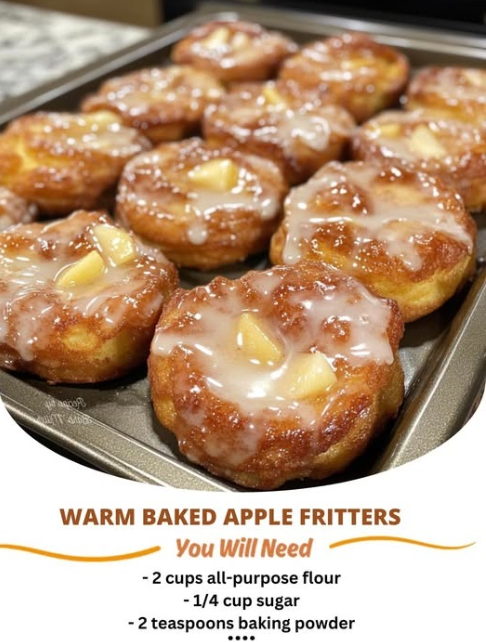
The Bake: Bake for 12–15 minutes. You are looking for a golden-brown exterior and a center that springs back when touched.
The Glaze Finish: While the fritters are warm (but not hot), whisk the glaze ingredients together and drizzle generously over the fritters. Let them sit for 5 minutes to allow the glaze to set into a “shatter-crisp” shell.
Presentation: Serving and Storage
Serving: Serve these while they are still carrying the residual heat of the oven. They pair magnificently with a cup of dark roast coffee or a glass of cold apple cider. A small dusting of extra cinnamon on the plate adds a professional, aromatic touch.
Storage: Baked fritters are best consumed within 24 hours. If you have leftovers, store them in a paper bag (rather than plastic) to help maintain the crust.
Reheating: Revitalize the texture by placing them in a 350°F oven for 3–5 minutes. Avoid the microwave, as it will cause the glaze to melt into the dough, making it soggy.
Chef’s Tips: Mastering the Fruit
Uniform Dice: Cut your apples into 1/4-inch pieces. If they are too large, the fritter will fall apart; if they are too small, you lose that “burst” of fresh fruit texture.
Temperature Check: Ensure your eggs and milk are at room temperature to help the batter emulsify more smoothly.
The Glaze Window: Glaze the fritters while they are still warm! This allows a little bit of the glaze to soak into the top layer, while the rest dries into a beautiful, crackly crust.
The Flavor Pivot: Variations
The Maple Harvest: Substitute the vanilla extract in the glaze for pure maple syrup for a deeper, woody sweetness.
Berry Fritters: Replace half the apples with fresh blueberries for a “Summer Orchard” twist.
The Nutty Crunch: Add 1/2 cup of finely chopped pecans or walnuts to the batter for an earthy, savory contrast.
Salted Caramel: Instead of the milk glaze, drizzle with a warm salted caramel sauce for a truly indulgent dessert experience.
Success Strategies: The Dough Regulation
To ensure your baked fritters have the “loft” and texture of their fried counterparts, follow these baker’s regulations:
Avoid the Whisk: Once you add the wet ingredients to the dry, switch to a spatula or spoon. A whisk will over-develop the gluten, resulting in a rubbery fritter.
High Heat is Key: 400°F is higher than standard cookie temperatures. This high heat causes the baking powder to react quickly, creating the airy “domes” that define a great fritter.
Parchment Only: Do not just grease the pan; use parchment. The sugar in the apples and the glaze can stick easily, and parchment ensures a “stress-free” removal.
Conclusion: An Honest, Vibrant Tradition
Warm Baked Apple Fritters represent the best of “honest” home baking. They strip away the unnecessary complexity of deep-frying and replace it with a focused, fruit-forward experience. By respecting the natural moisture of the apples and the science of the leavening, you’ve created a dish that is both vibrant and grounding. This is a recipe that welcomes the “chaos” of a busy kitchen and turns it into something refined and comforting. Enjoy the golden-brown crust, the soft, spiced interior, and the simple joy of an orchard classic, perfected.
Frequently Asked Questions
Do I need to peel the apples?
While you can leave the skins on for a more rustic, fiber-rich fritter, peeling them provides a more “velvety” and consistent texture in every bite.
Can I use a different flour?
A 1:1 gluten-free baking flour works well here. Whole wheat flour can be used, but it will result in a much denser, “heartier” fritter that requires a bit more milk.
Why didn’t my fritters brown?
This usually means the oven wasn’t hot enough or you didn’t bake them long enough. Ensure your oven is fully preheated before the fritters go in.
Can I freeze these?
Yes! Freeze the *unglazed* fritters in a single layer. When ready to eat, bake at 350°F until warm, then apply fresh glaze.
Would you like me to suggest a “Cinnamon-Spiced Whipped Cream” recipe to serve as an elegant dollop on the side?
**Would you like me to suggest a “Cinnamon-Spiced Whipped Cream” recipe to serve as an elegant dollop on the side