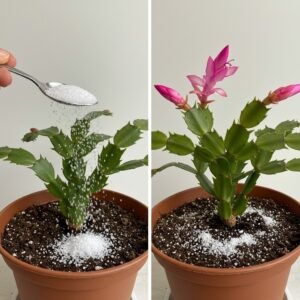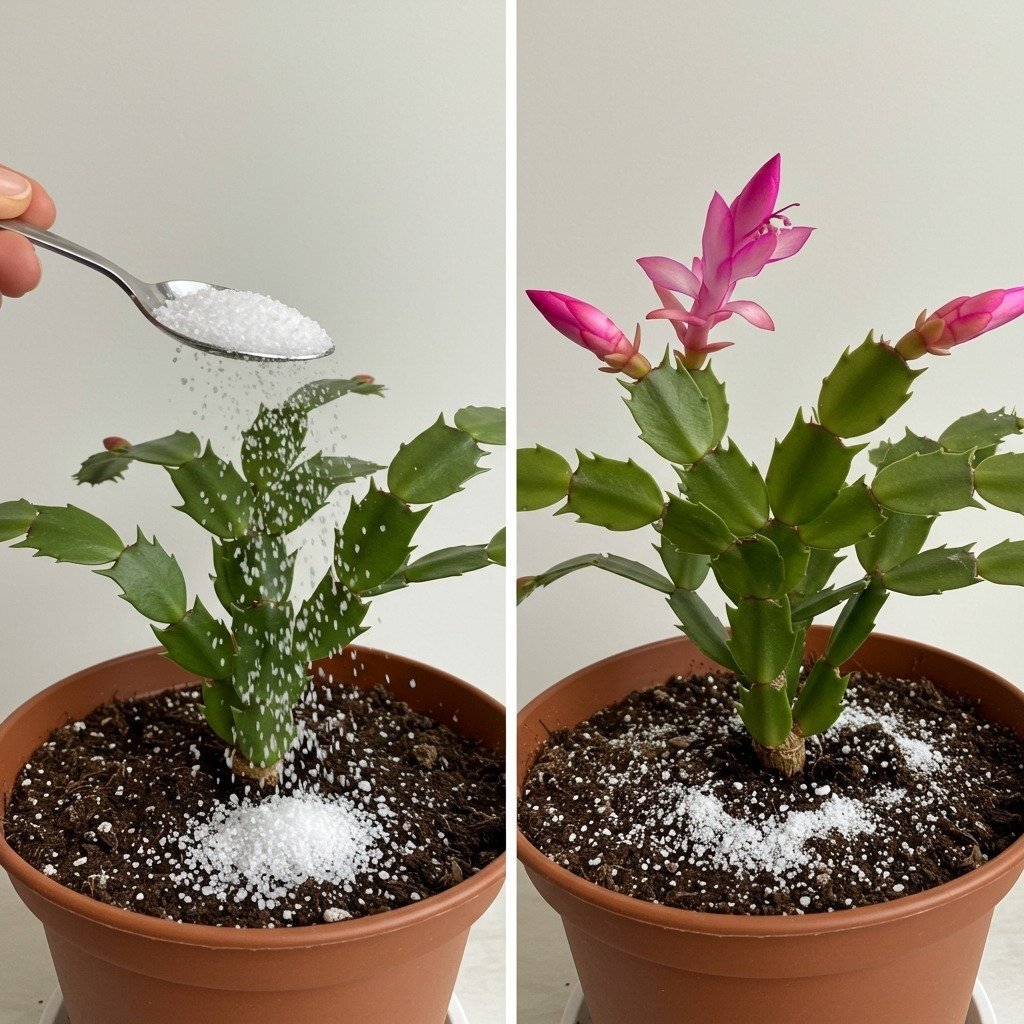
Promotes Blooming
One of the most exciting outcomes of this technique is the encouragement of blooming. Flowering requires significant energy, and plants will not produce buds if they are struggling with deficiencies.
Magnesium plays a direct role in energy transfer within the plant, ensuring that carbohydrates produced in the leaves move efficiently to developing buds and flowers.
For species such as African violets, orchids, or hibiscus, which are known for their colorful displays, Epsom salt often makes the difference between sporadic blossoms and a steady show of blooms. Even reluctant bloomers can be coaxed into action with this extra push.
Easy Application
The method is simple and does not require specialized equipment:
Measure the salt: Use half a teaspoon of Epsom salt per liter of water.
Dissolve thoroughly: Stir until the crystals are fully dissolved.
Apply as watering: Use this solution in place of a regular watering about once a month.
Avoid overuse: Do not exceed the recommended frequency. Too much magnesium can interfere with the absorption of calcium and potassium, leading to other imbalances.
For foliage plants that are not in bloom, the same solution can still be applied. It will promote greener leaves and stronger growth.
If desired, the solution can also be used as a foliar spray, misting the leaves lightly for direct absorption.
Safety and Considerations
Epsom salt is safe for most houseplants when used in moderation. However, a few precautions should be kept in mind:
Test on one plant first: If uncertain, apply the solution to a single plant and observe results over two weeks.
Do not combine with high-magnesium fertilizers: Check labels of commercial products to avoid overdosing.
Refresh soil annually: While Epsom salt can correct deficiencies, it is not a substitute for good potting mix. Re-potting or top-dressing with fresh soil remains essential.
Balance with light and water: Nutrients alone will not save a plant deprived of sunlight or overwatered to the point of root rot. Epsom salt should be part of a holistic care routine.
Integrating Into Fall Plant Care
Epsom salt works best when combined with other seasonal practices:
Adjust watering: Plants generally need less water in fall as growth slows. Check soil moisture before watering.
Maximize light: Shorter days mean less energy for photosynthesis. Move plants closer to bright windows or supplement with grow lights.
Prune and tidy: Remove dead leaves and faded flowers to direct energy toward healthy growth.
Monitor humidity: Indoor heating often dries out the air. A humidity tray or small humidifier can reduce stress on flowering plants.
When paired with these steps, the monthly Epsom salt boost ensures that flowers not only survive the seasonal transition but continue to thrive.
Results to Expect
By mid-fall, plants treated with this method typically show:
Richer green foliage with fewer yellow patches
Stronger stems capable of supporting new blooms
Improved bud formation and more consistent flowering
An overall healthier, more vibrant appearance
While results vary depending on plant type and initial condition, most indoor gardeners report noticeable improvement within four to six weeks.
Conclusion
Fall does not have to mark the decline of house flowers. With the simple addition of Epsom salt, you can extend their vitality, promote lush foliage, and encourage blooms well into the cooler months.
This inexpensive and easy method provides exactly what many potted plants lack at this time of year: magnesium and sulfur in an accessible form.
A teaspoon of prevention is worth a pound of cure. By adopting this little secret into your fall routine, you give your flowers the resources they need to remain vibrant, resilient, and beautiful—proving that even in the season of fading light, life and color can still flourish indoors.